Friday, December 18, 2009

The Great Recession: Glass-Steagall Revisited


Senators John McCain (Republican; AZ) and Maria Cantwell (Democrat; WA) introduced a bipartisan bill on December 16, 2009 that would reinstate some of the banking safeguards that were eroded when the Glass-Steagall Act was repealed in 1999* (more).


Provisions of the Glass-Steagall Act that were enacted in 1933 restricted commercial banks (i.e., those that accepted deposits and made loans) from engaging in investment banking activities (i.e., issuing, underwriting, selling or distributing... stocks, bonds, debentures, notes or other securities).

With the repeal of Glass-Steagall in 1999* (GSA repeal), all of this country’s major commercial banks started aggressively participating in the risky world of Wall Street and investment banking. It was the creation and marketing of, and investing in, mortgage-backed securities and collateralized debt obligations (CDOs) by major commercial banks that caused this "Great Recession" when securities containing and derivatives (CDOs) based upon mortgages with an extremely high risk for default started plunging in value.

The proposed Cantwell-McCain Act would once again establish a firewall between commercial banks and investment banking activities, and also get commercial banks out of the insurance business.

This is a very positive step forward (along with proposed "Too Big to Fail; Too Big to Exist" legislation) in preventing the type of economic disaster we are now experiencing from ever happening again, and Senators McCain and Cantwell should be applauded for their efforts.


* FOOTNOTE:

To give a little historical perspective, and to underscore just how big of scoundrels some of the "Masters of the Universe" have been over the past 10 years, consider the following:

In April 1998, Travelers Group (Travelers Insurance) CEO Sanford I. Weill, and President/COO Jamie Dimon (current Chairman and CEO of JPMorgan Chase), announced an agreement to merge with Citicorp, creating CitiGroup, which at the time would be the largest and the most profitable company in the world. Because the merger violated the Bank Holding Company Act (BHCA) and portions of the Glass-Steagall Act (GSA) that prohibited banks from owning insurance companies, CitiGroup asked for, and received, a two-year forbearance from the federal government. The merger was completed on October 8, 1998.

Weill, Dimon, and others involved in the merger were confident that Congress would soon pass legislation overturning BHCA and GSA - they and the rest of the banking industry had lobbied hard for years and calculated that they had, by 1998, "bought-off" enough legislators to successfully obtain a repeal of those restrictive regulations. But just to hedge their bets, CitiGroup recruited ex-President Gerald Ford (Republican) to the Board of Directors, and the assistance of Robert Rubin (former Goldman Sachs executive; former U.S. Treasury Secretary). After resigning as Treasury Secretary (midway through second term in Clinton Administration), and while reportedly in secret negotiations to become a director on the CitiGroup board of directors, Robert Rubin helped broker the final deal to pass the bill which would repeal BHCA and GSA. Top CitiGroup officials were reportedly allowed to review and approve drafts of the legislation before it was formally introduced in the Senate.

The Gramm-Leach-Bliley Act (primary sponsor: William Philip "Phil" Gramm, former Republican U.S. Senator from Texas) passed in November 1999, repealing the BHCA and portions of the Glass-Steagall Act, thus allowing banks, brokerages, and insurance companies to merge, and making the CitiGroup/Travelers Group merger legal.

Sound a little skunky? It was! And it was this "Masters of the Universe" arrogance, and political skuldugery, that opened the door for, and encouraged, the outrageously-reckless banking activities that we now know were the root-cause of the "Great Recession" that we are all currently struggling to get through.


The Gang of Scoundrels that set the stage for the "Great Recession"


Sanford Weill
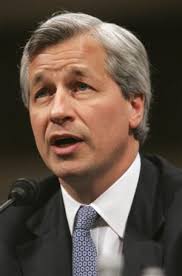


Jamie Dimon
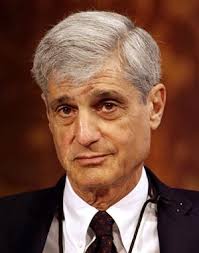


Robert Rubin


Phil Gramm


Next Post in Topic, "The Great Recession"

Thursday, December 17, 2009

The Great Recession: Goldman Sachs Backs Down (sort of)

Goldman Sachs, one of the two remaining major investment banks in the country and a major architect in causing the recent collapse of the American economy*, was planning on rewarding its top executives and traders with a total of $17 - $20 Billion in year-end bonuses for 2009 (link1; link2).

But apparently the public outcry over this conspicuous level of greed, combined with the threat that substantial windfall taxes might be levied against these bonuses, convinced Goldman to award company stock, instead of cash, to their top 30 executives this year (more). What a hardship - just how will they manage to scrape by without that cash! But of course, the stock will most likely end up being worth far more, in just a few years, than the canceled cash bonus.


* or as Lloyd Blankfein, Goldman Sachs Chairman and CEO, put it in November in a rare display of contrition: "We
participated in things that were clearly wrong and have reason to regret" (apology).


Next Post in Topic, "The Great Recession"

The Great Recession: Europe Taxes the Bonus Windfall

The British government, which like the United States propped-up failing banks with taxpayer funds, announced on December 9 that it would levy a one-time 50% tax on any banker bonus that exceeded approximately $ 41,000 (article). The move was designed to discourage big Christmas and year-end rewards for the bankers who caused this global economic catastrophe, and to try to recover some of the taxpayer bail-out money that was injected into the financial services industry.

The following day, the President of France announced that his country would impose an "equivalent" windfall tax on bankers’ bonuses (article).

Officials in both countries have urged their counterparts around the world, including the United States, to take similar actions against what is perceived as blatant banker greed at a time of global economic crisis.


Next Post in Topic, "The Great Recession"

The Great Recession: Goldman Sachs Gets Armed !


It’s almost humorous (if there can be any humor in this economic disaster).

It has been reported (article) that senior executives at the investment banking firm, Goldman Sachs, have been buying firearms, and applying for concealed weapons permits, in advance of receiving their 2009 year-end bonuses. Apparently, some of them have begun to get a little uneasy about the public reaction to their multi-million dollar bonuses, and the possibility of a "populist uprising" against them (an open hunting season on Wall Street?).

These "Masters of the Universe" still don’t understand why the American people hate them so much (I guess when you take home tens of millions of dollars each year for simply playing with other people’s money, it’s hard to relate to the person who was just getting by to begin with, and now has had his or her livelihood completely taken away). But even if they don’t understand the "why", at least they’re beginning to comprehend that middle-class America is mad as hell, and isn’t going to put up with their bullshit anymore.


Next Post in Topic, "The Great Recession"
-

Monday, December 14, 2009

The Great Recession: Bankers in Piggie Heaven


Banker Piggies Feeding at the Trough


That would be Ken Lewis (Bank of America) on the right, Vikram Pandit (CitiGroup) on the left,
and the biggest piggie of all, Jamie Dimon (JPMorgan Chase) in the center.

Gorging themselves on a piggie-feast of obscene, undeserved bonuses and perks,
with abusive credit card penalty fees and interest rate increases for dessert.

Fattening themselves before the slaughter?
The great American pork chop barbecue may be coming sooner than they think.

OINK !


Next Post in Topic, "The Great Recession"


Tuesday, December 8, 2009

The Great Recession: The Recession is Over ?


Economists have pronounced the national recession over as of August 2009. But don’t start celebrating just yet.

The recession may technically be over, but don’t expect any substantive improvements to occur anytime soon. The economic growth that was seen from May through November was modest, very modest (bordering at times on trivial) at best. The economic recovery is going to be long and slow. There is still great uncertainty about the economy, and in the world of economics and finance, uncertainty is the enemy. No one wants to be the first to jump back in, risk being premature, and get slapped back down.

So, the economic hardships for tens of millions of Americans will continue. More foreclosures as the next wave of risky mortgages come due to re-set. Continued unemployment. More people pushed out of their middle class existence and into financial distress.

Expect at least another 9 - 12 months before any semblance of normalcy begins to return. Even then, it may be years before the U.S. economy fully recovers from this "Great Recession". Sadly, millions of Americans may never recover, and quite possibly will remain in poverty even after this great economic catastrophe finally passes.

Never forget: This economic crisis did not just happen. It was engineered by a relatively small group of executives who control the financial services industry. All of this economic hardship and distress was caused by their greed, by their arrogance, and by their recklessness. Never forget... never let it happen again!


Next Post in Topic, "The Great Recession"-
-

The Great Recession: Still More on "Too Big to Fail; Too Big to Exist"


[original posting on subject, "
Too Big to Fail; Too Big to Exist Act of 2009"]
[also see: "More on Too Big To Fail; Too Big to Exist"]


Still don’t think Bernie Sanders’ (U.S. Senator, Vermont) proposed "Too Big to Fail; Too Big to Exist Act of 2009" has senior banking executives very, very worried?

Jamie Dimon (CEO and Chairman, JPMorgan Chase) certainly seems a bit worried. Shortly after the proposed bill was introduced, he had a commentary published in the Washington Post (November 13, 2009) where he offered his arguments for why there should not be legislation limiting the size or scope of financial-services companies.


Jamie Dimon, Chairman & CEO JPMorgan Chase
(don’t you just love his shit-eating, I got mine - screw the rest of you, banker smirk? )


Jamie’s self-serving diatribe confirms just how much the "Masters of the Universe" bankers really are divorced from the financial realities faced by most American consumers, and small and mid-sized American businesses.


In reality, the whole purpose for banks getting increasingly bigger is to support continuing growth of their profits. Any services that they happen to provide to consumers and business are merely coincidental to maintaining their growth. In fact, most of the "Masters of the Universe" would probably love to find a business model that would allow them to make oodles of money without having to deal with us pesky and costly customers.

Let’s take a closer look at Jamie’s propaganda:

  • (2nd paragraph): "scale can create value for shareholders"

    Rebuttal: Scale doesn’t guarantee shareholder value, and in fact can destroy shareholder value, as has recently been demonstrated for companies such as Citigroup, Bank of America, and others.


  • (2nd paragraph): "scale can create value for consumers, who are beneficiaries of better products, delivered more quickly and at less cost"

    Rebuttal:

    (a) Prior to the mid-1990s (when the "super-sizing" of banks began) fiscally- responsible people had no difficulty in obtaining the banking services and credit that they needed. Credit cards, automobile loans, unsecured personal loans, and home mortgages were all readily available to people who met common sense financial qualifications.

    (b) The result of the creation of super-banks over the past 15 years is the present economic chaos... hardly a benefit to consumers. Somewhere between 30 and 50 million American citizens have been significantly (and in many cases severely) impacted by the greed and recklessness of the super-banks. Probably about half that number got into trouble because the super-banks provided then with credit, or credit terms, which were not appropriate for their financial circumstances. But the other half, 15 - 25 million American consumers, did absolutely nothing wrong - they just ended up being collateral damage in the economic meltdown that the super banks caused. So, where the hell is this "value" to consumers that you’re prattling about Jamie?


  • (2nd paragraph): "scale can create value for the businesses that are our customers"

    Rebuttal: So where’s the "value" in millions of small and mid-sized American businesses going under because the super-bank-caused recession has destroyed their revenue streams, and locked them out of the credit they need to cover ongoing operating costs? Come on Jamie, the greed and recklessness of the super-banks even brought some of the largest multinational corporations of this country (for example GM) to the brink of failure.


  • (2nd paragraph): "scale can create value for the economy as a whole"

    Rebuttal: Yeah, right.... so how’s that working for you America? The negligent and reckless actions of the bloated super-banks set the American economy teetering on the brink of complete collapse, and you want to argue that that is "value" for the economy Jamie? Just what have you been smoking recently, eh?


  • (7th paragraph): "... some of America's largest companies... operate around the world... need financial-services partners that can efficiently execute diverse and large-scale transactions; that offer the full range of products and services from loan underwriting and risk management to providing local lines of credit; that can process terabytes of financial data; that can provide financing in the billions"

    Rebuttal: So Jamie, you want to argue that multi-national corporations, and a global economy, have only existed since the mid- to late 1990s? Come on now... American companies have been doing business around the world, and we’ve had a "global economy", since at least the mid-1960s. The multi-national business world operated just fine, long before the creation of today’s super-banks.


  • (5th paragraph): "financial institutions... can pose serious risks for our markets because of their interconnectivity. A cap on the size of an institution will not prevent that risk"

    Rebuttal: ????? Jamie, the interconnectivity is a direct result of size. The super-banks have their tentacles extended into every facet of the American financial system. They control the lion’s-share of capital in this country, shuttle it around between themselves, and then dole it out in small amounts to the rest of the system. The smaller community and regional banks are at the mercy of the super-banks for both capital, and for a variety of processing and other banking services. If we go back to a financial system based upon local and regional institutions, this problem of interconnectivity and dangerous banking monopolies will cease to exist.


  • (2nd & 3rd paragraphs): "...ensuring that even the biggest bank can be allowed to fail in a way that does not put taxpayers or the broader economy at risk... creating the structures to allow for the orderly failure of a large financial institution... giving regulators the authority to facilitate failures when they occur"

    Rebuttal: Sounds good, but, would there really ever be such a thing as an "orderly failure" of a large financial institution? I mean, as soon as the first inkling of trouble got out, the financial world would react and the damage to the overall economy would be already done. In reality, the only way to keep the failure of a large financial institution from damaging the overall economy, is to prevent them from getting too big, and from acquiring too much economic power, in the first place.


  • (1st paragraph): "...if some unforseen circumstance should put this firm [JPMorgan Chase] at risk of collapse.... we should be allowed to fail"

    Rebuttal: Again, sounds good. but what if it’s not an unforseen circumstance that’s involved? What if it’s the reckless, negligent actions of Jamie Dimon that put the company at risk? Should the company still be allowed to fail and shareholders and creditors punished? Shouldn’t, in such a case, Jamie Dimon be held responsible for the collapse, and personally liable for all the consequences and damages that result?

    We’d like to know Jamie, because in the current financial crisis, there were no unforseen circumstances involved. This economic meltdown was caused by a handful of financial-service company executives who negligently and recklessly:

    - engaged in, or facilitated, the origination of extremely poor quality and risky mortgages;

    - underwrote and distributed asset-backed securities from this pool of risky mortgages;

    - created, disseminated, and invested in outrageously risky derivative instruments (collateralized debt obligations) that had these near-worthless mortgages at their foundation;

    - participated in the misrepresentation of poor quality securities and CDOs as "investment-grade" instruments.

    Why should creditors and shareholders take the fall for the negligence (or even criminal fraud) of bank executives?

    Instead of being held personally liable for the damages they caused, many of the super-bank "Masters of the Universe" who created this current economic mess not only got to retain their jobs, they even got bonuses. Most of the rest were allowed to gracefully "retire" with generous buyouts and pensions, or were handsomely rewarded with a "golden parachute" when their contracts were terminated. So Jamie, do you see now why the American public is so pissed-off at you and your banking colleagues?


I’m sorry Jamie - I just can’t buy any of your arguments. Remember, you were a big part of the problem that created this "Great Recession" - you and your JPMorgan Chase were up to your eyeballs in the subprime and other high-risk mortgage bullshit that caused the economic meltdown.

The only reason JPMorgan Chase didn’t experience the same level of pain as some of its super-bank peers is that you got cold feet in late 2006, dumped $12 Billion of toxic mortgages that had been originated or acquired by your company (as in, you transferred the risk from your company to other people), and got out of the risky derivatives (collateralized debt obligations) game (more). Yes, that made you a hero with your shareholders, but you still have to claim responsibility for your contribution to the damages that have been inflicted upon the U.S. economy.

So it comes down to this Jamie: As far as I’m concerned, your arguments against regulating the size of financial companies are just the same tired propaganda we’ve come to expect from the banking industry. You worked most of your career to create the country’s largest financial-services company: Your own personal banking empire. You’ve played the "mine’s bigger than your’s" game very well for many years. And now it’s obvious that you’re very afraid that all that you’ve worked to create is going to be taken away and/or dismantled.

Too bad... but it’s no one’s fault but your own Jamie. Your undoing was the blatant greed, arrogance, and recklessness that you and your fellow super-bankers displayed over the course of the past 15 or so years. The citizens of this country have the right to insist that individuals like you never have the opportunity to inflict this kind of devastating economic damage on the American people again.


Next Post in Topic, "The Great Recession"

Tuesday, December 1, 2009

The Great Recession: Thanksgiving 2009


Well, Thanksgiving 2009 has come and gone. For tens of millions of Americans this year, there probably wasn’t a whole lot to be thankful for. And the Christmas holiday season is probably looking pretty grim for them too.

Somewhere between 15 and 20 million Americans are currently out of work, with unemployment benefits quickly running out and no likelihood of improvement in the jobs market for at least another 9 - 12 months. These folks will most likely become economic casualties as their homes and possessions are taken from them by the same banks that caused this economic mess.

Still another 15 - 20 million Americans (maybe even more) are dealing with under-employment or reduction in income, and are struggling to get by month-to-month. Recent reports indicate that up to 60% of American households are currently experiencing moderate to severe financial distress.

But don’t fret - I’m sure that the small group of "Masters of the Universe" who created this economic debacle will be having a pretty comfortable and enjoyable holiday season.

Here’s a short list of the grinches who brought you this economic crisis. It’s by no means a complete list - these are just some of the individuals who managed to do the most damage to the U.S. economy and the American people:

Kenneth D. Lewis - former Chairman / retiring CEO (Dec 2009), Bank of America

James L. "Jamie" Dimon - current Chairman / CEO, JP Morgan Chase

Vikram Pandit - current CEO, CitiGroup

Charles Prince III
- former CEO, CitiGroup

Richard Kovacevich - former Chairman / CEO, Wells Fargo

G. Kennedy Thompson - former Chairman / CEO, Wachovia

Kerry K. Killinger - former Chairman / CEO, Washington Mutual

Jeffrey Peek - former Chairman / CEO, CIT Group


Jerry A. Grundhofer – former Chairman / CEO, US Bancorp

Richard Syron - former Chairman / CEO, Freddie Mac

Franklin Raines - former Chairman / CEO, Fannie Mae

Daniel Mudd - former CEO, Fannie Mae

James E. Cayne - former Chairman / CEO, Bear Stearns

Henry M. "Hank" Paulson - former Chairman / CEO, Goldman Sachs

Lloyd C. Blankfein - current Chairman / CEO, Goldman Sachs


Richard Fuld - former Chairman / CEO, Lehman Bros.

E. Stanley O'Neal - former Chairman / CEO, Merrill Lynch

John J. Mack - former CEO; current (Sept 2009) Chairman, Morgan Stanley

Angelo Mozilo - former Chairman / CEO, Countrywide Financial

Brad A. Morrice – former CEO, New Century Financial

Robert K. Cole – former CEO, New Century Financial

William D. Dallas - former Chairman / CEO, Ownit Mortgage Solutions

David A. Daberko - former Chairman / CEO, National City Mortgage

Wayne Lee - former CEO, Ameriquest Mortgage


[There will be a lot more specific information, and detailed discussion, about some of these "Masters of the Universe" posted here at a later date]


If you happen to run into one of these overly-privileged bankers, be sure to congratulate them on receiving their fat bonuses, stock / stock-option awards, golden parachute payments, and/or retirement buy-outs. And of course, don’t forget to thank them for all that they’ve done to enhance the financial security of the American public.


Next Post in Topic, "The Great Recession"
-

Tuesday, November 24, 2009

The Great Recession: It Didn't "Just Happen"


No, contrary to what the bankers might want you to believe, the "Great Recession of 2008 / 2009" didn’t just happen. It was not something that resulted from normal and unavoidable economic conditions. The Great Recession was in fact engineered by the financial industry. And while they (the financial industry "Masters of the Universe") probably didn’t intend for the resulting outcome, they did intentionally pursue the path of greed and recklessness that brought about the meltdown of the U.S. economy.

You see, economic recessions are not all that uncommon. They are a natural part of the economic cycle, and adjust the economy in response to changes in consumer spending and consumption, or increasing or decreasing prices of goods and labor. In many ways, a recession is like re-booting the economy - a fresh startup without all the "bugs" that were bogging-down the system.

A recession is classically defined as two consecutive quarters of negative economic growth. The National Bureau of Economic Research (NBER) defines a recession as a "significant decline in economic activity lasting more than a few months" (see Recession Defined).

On average, the U.S. economy experiences a recession every 5 - 8 years (see Recession History). The magnitude of economic contraction, and the duration of recessionary conditions, determines whether a recession is classified as mild, moderate, or severe. "Normal" recessions are typically mild to moderate in their impact, and are relatively short-lived (5 - 15 months average).

An economic slowdown that doesn’t quite meet the definition of a recession is referred to as a "correction". Corrections tend to occur every 2 - 4 years. It’s all part of the normal economic cycle: A period of accelerating economic growth, followed by a growth spike and plateau, and then a period of economic contraction leading into the next growth phase.


By February / March of 2008, many economists were predicting that an economic correction, or a mild to moderate recession, was on the horizon due to the slowdown in the previously red-hot residential real estate (housing) market, and concerns over a rising level of defaults in so-called "sub-prime" mortgages (Frontline Thoughts; Economist Forecasts). But virtually no one, not even as late as mid-summer 2008, foresaw what was actually going to happen to the economy in September (2008).

That’s because the financial industry had worked very hard to keep hidden the nature and full magnitude of the outlandishly-risky "investments" they had made in the mortgage markets. When the extent of those investments were finally exposed, and the degree to which many of the mortgages underlying those investments were identified as being at extreme risk for default, panic swept the financial industry and within days the entire economy was teetering on the brink of total collapse.

So, what should have been a tolerable, mild to moderate recession, turned into the worst economic calamity since the early days of the Great Depression 80 years ago. The U.S. economy skirted around the abyss, threatening for almost 6 months to fall into complete depression. Only super-human responses by the federal government kept the economy intact at all. All because a relatively small group of greedy financial industry "Masters of the Universe" decided to play craps with the U.S. economy. They gambled, they lost, and we, the American people are paying dearly for their greed, arrogance, and recklessness.

After what they did, you’d think these fallen "Masters of the Universe" would show some shame and penance. But that’s far from the case. They’ve been in complete denial since Day 1. And as the recession has dragged-on, they’ve increasingly taken the position that they’re innocent victims of the economic downturn too (earlier posting: Banks Revise History).

Maybe that denial is the result of their well-ingrained arrogance. Then again, maybe they’re afraid of the public relations consequences of taking responsibility for their actions (it’s hard to ask people to trust you with their money after you’ve just admitted to being reckless and negligent with trillions of dollars). Or maybe, just maybe, they recognize the liability implications - if they admit to any level of responsibility, there’s a good chance that they’re going to be required to compensate both individuals and companies for the financial damages that were incurred - and that would probably put them out of business altogether.

Just don’t forget - this Great Recession didn’t just happen. It was caused by the reckless actions of a small group of greedy, arrogant commercial and investment bankers.


Next Post in Topic, "The Great Recession"
-

The Great Recession: More on "Too Big to Fail; Too Big Too Exist"


[original posting on subject, "Too Big to Fail; Too Big to Exist Act of 2009"]
[also see, "Still More on Too Big to Fail; Too Big to Exist"]

I’ve heard more than a few people comment that the notion of the federal government dismantling private financial companies sounds un-American: It’s unconstitutional and just one step away from communism they say.

Just as a matter of full disclosure, I am one who believes that the federal government has vastly over-stepped its constitutional authorities in the last 75 years or so, and as such, I usually don't support giving the Feds even more authority to intrude into our lives (that's topic for discussion at a later date). But in this case, I do completely support the concept of the federal government being granted the power to break-up financial companies that pose an unacceptable risk to the U.S. economy and the overall greater good of the American people.

Remember - the large commercial banks that were involved in causing this current economic nightmare were essentially created by the federal government. For the first 80 or so years after this country was founded, banks were regulated primarily at the state level. In 1864, the federal government created a system of national banks: Banks chartered and regulated by the federal government [see occ-history and wiki-national-bank for more information].

The stated purpose was to promote and facilitate the role of banking in interstate commerce. However, a large part of the motivation was to give the financial industry a way to circumvent what was often very stringent state-level oversight and regulation. As such, the federal government does have the right, and even the duty, to effectively regulate and control the monster that it created.

Look at it this way - the federal government participated in the creation of these mega-banks, so they certainly have the right to participate in dismantling any of them that threaten the stability of the overall U.S. economy.

If a national bank doesn’t like these new rules, they always have the option of going back to being a state-chartered company.

Of course, the mega-bankers insist that their largesse has provided significant benefits to American consumers and businesses in the form or easier access to credit. I guess in light of the current economic landscape, I should paraphrase Dr. Phil and ask, "so America, how’s that workin’ for ya ?"

The fact is, the whole argument (the same one they used all through the 1990s to persuade Congress to relax regulations and let them morph into mega-banks) is nothing but bullshit.

Any of us who were around prior to 1994, when this feeding frenzy of activity to become the largest banks in the country was first allowed to start, know that financially-responsible people had no difficulty in obtaining the credit they needed. I had all the credit cards I wanted or needed all through the 1970s and 1980s (a MasterCharge (later MasterCard); a BankAmeriCard (later Visa); American Express; Discover Card; Diners Club; store charge cards; gasoline cards). I never had any problem getting a car loan (and I got at least 3 or 4 in that time period). On at least 3 occasions, I went to the local bank, met with the manager, and got small ($ 8,000 or less) unsecured loans. And of course, I was able to get a home mortgage without any difficulty. All this easy access to needed credit, long before the so-called "benefits" of interstate super-banking companies came into existence.

Citi Bank and Chase Bank were already giant financial institutions that dominated the banking industry in the U.S., and operated on a global scale, long before the frenzy of creating today's super-banks started in the mid-1990s. Their morphing into super-banks had nothing to do with a desire to provide additional or better services to customers. The existence of interstate mega-banks provides no compelling benefit to American businesses or the American people. To the contrary, as the current economic situation has made abundantly clear, allowing a handful of banks to grow to gargantuan size and monopolize the flow of money in the country can instead have severe detrimental effects on consumers, businesses, and the economy as a whole.

So, who really benefits from these super-banks? That’s easy - the bigger they get, the more segments of the economy these banking companies can control, and consequently, the more profits that they can rake in. And the more profit, the bigger the compensation packages for that small group of "Masters of the Universe" who control the mega-banks.

Conclusion - if any nationally-chartered financial company grows to a size where it has the potential to control or adversely impact the U.S. economy, or otherwise represents a threat to the financial health of the American public, then the federal government not only should, but must, take steps to breakup that company and eliminate the threat that it poses.


Read a summary of the Too Big to Fail; Too Big to Exist Act of 2009 at:

http://seekingalpha.com/article/172245-the-too-big-to-fail-too-big-to-exist-act-of-2009

then support the bill by signing the online petition at:

http://sanders.senate.gov/petition/?uid=c53f1aca-5881-403e-928b-a25980cb4e0c


Next Post in Topic, "The Great Recession"
-

Friday, November 20, 2009

The Great Recession: The Banking Industry Tries To Revise History


The "Great Recession" of 2008 / 2009, the worst economic setback experienced by this country since the depression of the 1920s and 1930s, was caused by the greed and arrogance of a relatively small number of bankers and mortgage lenders who intentionally engaged in negligent and extremely reckless conduct from 2001 through 2008.

This is not speculation - this is fact. Not that you’d ever know it from the advertising that the major commercial banks (Bank of America; Wells Fargo; CitiBank; Chase) have been churning out the last few months.

Starting just about a year after their recklessness was exposed, resulting in a meltdown of the U.S. and world economies, these banks have been working overtime to try to revise the facts of history and convince us all that everything they do (and have done) is really in our best interests.

Is anyone else insulted and outraged by some of the advertising that’s out there? I mean, how arrogant and shameless can these bankers be (or, how stupid do they really think we all are)?

You’ve probably seen the ads - for example, the Citi ads that claim that their bank is working hard to help us (the consuming public) get through these difficult times. Of course, there’s no mention of the fact that they played a major role in creating these difficult times. And I guess by "helping" they must mean foreclosing on homes, repossessing vehicles, and engaging in abusive credit card practices against their customers who have been driven into financial distress as a result of the irresponsibility and recklessness of the banking industry. "Citi is Helping" - yeah, right.

How about the Bank of America ads that claim that they are now the "Bank of Opportunity"? Would that be the opportunity for customers to have their credit accounts closed and their credit ratings destroyed? Or maybe the opportunity to be financially raped by outrageous credit card interest rate increases and compounding penalty fees - practices that would make even a loan shark blush?

And then there is the bank ad that claims that they have responded to what we (their customers) have asked for, and that they are now offering simpler and fairer credit card terms and checking / debit overdraft policies. Of course, there’s nothing in the ad to reflect that their prior behavior was deemed deceptive, predatory, and unfair by the federal government, or that the U.S. Congress enacted new laws to force them to stop their abusive practices.

So, when you see bank advertising that is trying to change the facts of history, or that claims that they really only have your best interests at heart - just remember, this is propaganda from the people who crapped the economy big-time in their quest for obscene levels of personal and corporate wealth. There is nothing that they have ever done, or will ever do, that is in your best interest. The only interest that these people have is protecting their profits - and they have already proven that they will let nothing get in the way of profit growth, and that they will utilize any tactic, no matter how reckless, unfair, or consumer-unfriendly, to achieve their profit goals.


Next Post in Topic, "The Great Recession"
-

The Great Recession: Never Let It Happen Again - The Too Big to Fail; Too Big to Exist Act of 2009


[also see: "More on Too Big To Fail; Too Big to Exist" and "Still More on Too Big to Fail; Too Big to Exist"]

Bernard (Bernie) Sanders, U.S. Senator for Vermont, has recently introduced a short and simple bill in the U.S. Senate. The bill is designed to prevent the banking industry from ever again getting itself into a position where banker irresponsibility, recklessness, arrogance, and greed can undermine the U.S. economy.

Basically, the bill, if enacted into law, would direct the Treasury Department to identify those financial companies that are too big to be allowed to fail (as in, those companies that the taxpayers have had to bailout this time around), and then require that those companies be dismantled into smaller component parts (kind of like what the federal government did to AT&T in the early 1980s).

You could envision, for example, the two largest bank holding companies, JPMorgan Chase and Bank of America, each being busted-up into maybe 5 - 10 smaller regional banks, similar to how things were prior to 1994 (that’s when restrictions on interstate banking were eliminated, and bank holding companies were allowed to universally operate in multiple states - the result was a feeding frenzy of banks gobbling each other up to create ever-larger companies, culminating in the five major banks of today who dominate (monopolize) the U.S. banking industry).

The rationale behind this bill is to prevent any financial company from ever becoming so large that its failure would jeopardize the security of the U.S. economy.

The proposed law is an outstanding idea that every American consumer should support (especially anyone who has been financially damaged by what the mega-banks did to the U.S. economy this time around).

You can demonstrate your support by signing the online petition that is located on Senator Sanders’ Website:

http://sanders.senate.gov/petition/?uid=c53f1aca-5881-403e-928b-a25980cb4e0c


[You can bet that the idea of the federal government havng the power to bust-up their private empires has the banking industry "Masters of the Universe" trembling in their pin-striped designer suits]

If you're mad as hell, and don't want to take this bullshit anymore, here's a way to take action against the banks that caused this economic meltdown. Sign the online petition, and forward a copy of the email (below) to everyone you know.

----------------------------------------------------------------------------------------------------------------------------------------

UPDATE No. 1:

The concept of the federal government being granted the power to breakup bloated financial companies was initially met with skepticism -" a snowball’s-chance in hell of passing" was the initial reaction of many. But the House Financial Services Committee just approved (November 18, 2009) a bill that included provisions by U.S. Representative Paul Kanjorski (Pennsylvania) that would allow the government to dismantle even healthy, well-capitalized financial firms that were so large, interconnected, and/or leveraged that they could harm the overall U.S. economy if they ever got into fiscal difficulty. So, this is a concept that, if the American people show their support for it, may very well end up being law in some form or another.


UPDATE No. 2:

A bill that contained the "too big to exist" provisions discussed in Update 1 passed in the House of Representatives on December 11, 2009 (More). Action on a Senate version (e.g., Bernie Sanders' bill) is expected in early 2010.

You still need to show your support by signing the online petition, and advising your federal Senators to vote for a "too big to fail; too big to exist" bill.

----------------------------------------------------------------------------------------------------------------------------------------


Here is one version of the email that has recently been circulating through the Internet regarding Bernie Sanders’ "The Too Big to Fail; Too Big to Exist Act of 2009". Help make sure that everyone is aware of this bill and has the opportunity to show their support for it if they want to. Forward a copy of the email to everyone you know.

******************************* email ***********************************

Fwd: Corrupted Mega-Banks - the Too Big to Fail; Too Big to Exist Act of 2009


>> Message >>

The "Too Big to Fail; Too Big to Exist Act of 2009"

This is Important !

Bernie Sanders, U.S .Senator from Vermont, has just introduced a bill in Congress that would break-up the mega-banks that caused this "Great Recession" we are struggling through (banks including JP Morgan Chase, Bank of America, Citigroup, Goldman Sachs, Morgan Stanley, Wells Fargo, and USBancorp. The purpose behind this bill is to prevent these banks, or any other bank, from ever again getting so large that their failure would threaten the overall U.S. economy.

The mega-banks are run by arrogant and outrageously greedy individuals who between 2001 and 2008 knowingly engaged in the negligent and reckless conduct which resulted in the destruction of the livelihoods and financial security of 30 million or more American citizens over the past 14 months.

After crashing the economy (worst recession since the Crash of 1929), these banks demanded government bailouts, and then used the taxpayer money to get larger (buying up distressed competitors) and paying the architects of the crisis obscene "talent retention" and "performance" bonuses. Adding insult to injury, they then embarked on a program of terrorizing U.S. citizens with foreclosures and repossessions, and have aggressively engaged in profiteering (jacking up interest rates on existing credit card balances).

It’s time for the American people to say "we’re mad as hell, and we’re not going to take it anymore !"

It’s time for the American people to give these mega-banks a good kick in the ass, and make sure that they can never damage this great country in this way again !

Read a summary of the proposed bill (Too Big to Fail; Too Big to Exist Act of 2009) at:

http://seekingalpha.com/article/172245-the-too-big-to-fail-too-big-to-exist-act-of-2009


There is also a petition that is soon going to be sent to U.S. Treasury Secretary Timothy Geithner that EVERY U.S. citizen should sign. It’s located at:


http://sanders.senate.gov/petition/?uid=c53f1aca-5881-403e-928b-a25980cb4e0c


This is EXTREMELY important !

At the very least, take the time to sign the petition online.

Here is the opportunity to express your outrage at the conduct of these banks – especially if you have been financially damaged by the actions of one or more of these banks.

If you really want to help prevent something like the current economic catastrophe from happening again, email, or mail a hardcopy of, the information at the two links provided above to YOUR federal legislators (House and Senate), with a note stating that you expect them to support the "Too Big to Fail; Too Big to Exist" bill.

If you do nothing, these banks will continue their abusive and reckless ways, will continue to financially enslave us all, and will have us back in a similar economic crisis situation in the not too distant future. Act now to protect the rights and financial security of yourself, and of every U.S. citizen !

Don’t delay – don’t give the politicians that have been bought off by the banks time to kill this bill in committee. Take a few minutes and deal with this today – DO IT NOW !!

And be sure to forward this email to everyone you know – especially anyone who has experienced financial difficulties as a result of the misconduct of these corrupt mega-banks.


Find the addresses for your federal legislators:
U.S. House of Representatives -
http://www.house.gov/
U.S. Senate -
http://www.senate.gov/general/contact_information/senators_cfm.cfm

**************************** end of email ********************************


Next Post in Topic, "The Great Recession"
_