Senators John McCain (Republican; AZ) and Maria Cantwell (Democrat; WA) introduced a bipartisan bill on December 16, 2009 that would reinstate some of the banking safeguards that were eroded when the Glass-Steagall Act was repealed in 1999* (more).
Provisions of the Glass-Steagall Act that were enacted in 1933 restricted commercial banks (i.e., those that accepted deposits and made loans) from engaging in investment banking activities (i.e., issuing, underwriting, selling or distributing... stocks, bonds, debentures, notes or other securities).
With the repeal of Glass-Steagall in 1999* (GSA repeal), all of this country’s major commercial banks started aggressively participating in the risky world of Wall Street and investment banking. It was the creation and marketing of, and investing in, mortgage-backed securities and collateralized debt obligations (CDOs) by major commercial banks that caused this "Great Recession" when securities containing and derivatives (CDOs) based upon mortgages with an extremely high risk for default started plunging in value.
The proposed Cantwell-McCain Act would once again establish a firewall between commercial banks and investment banking activities, and also get commercial banks out of the insurance business.
This is a very positive step forward (along with proposed "Too Big to Fail; Too Big to Exist" legislation) in preventing the type of economic disaster we are now experiencing from ever happening again, and Senators McCain and Cantwell should be applauded for their efforts.
* FOOTNOTE:
To give a little historical perspective, and to underscore just how big of scoundrels some of the "Masters of the Universe" have been over the past 10 years, consider the following:
In April 1998, Travelers Group (Travelers Insurance) CEO Sanford I. Weill, and President/COO Jamie Dimon (current Chairman and CEO of JPMorgan Chase), announced an agreement to merge with Citicorp, creating CitiGroup, which at the time would be the largest and the most profitable company in the world. Because the merger violated the Bank Holding Company Act (BHCA) and portions of the Glass-Steagall Act (GSA) that prohibited banks from owning insurance companies, CitiGroup asked for, and received, a two-year forbearance from the federal government. The merger was completed on October 8, 1998.
Weill, Dimon, and others involved in the merger were confident that Congress would soon pass legislation overturning BHCA and GSA - they and the rest of the banking industry had lobbied hard for years and calculated that they had, by 1998, "bought-off" enough legislators to successfully obtain a repeal of those restrictive regulations. But just to hedge their bets, CitiGroup recruited ex-President Gerald Ford (Republican) to the Board of Directors, and the assistance of Robert Rubin (former Goldman Sachs executive; former U.S. Treasury Secretary). After resigning as Treasury Secretary (midway through second term in Clinton Administration), and while reportedly in secret negotiations to become a director on the CitiGroup board of directors, Robert Rubin helped broker the final deal to pass the bill which would repeal BHCA and GSA. Top CitiGroup officials were reportedly allowed to review and approve drafts of the legislation before it was formally introduced in the Senate.
The Gramm-Leach-Bliley Act (primary sponsor: William Philip "Phil" Gramm, former Republican U.S. Senator from Texas) passed in November 1999, repealing the BHCA and portions of the Glass-Steagall Act, thus allowing banks, brokerages, and insurance companies to merge, and making the CitiGroup/Travelers Group merger legal.
Sound a little skunky? It was! And it was this "Masters of the Universe" arrogance, and political skuldugery, that opened the door for, and encouraged, the outrageously-reckless banking activities that we now know were the root-cause of the "Great Recession" that we are all currently struggling to get through.
The Gang of Scoundrels that set the stage for the "Great Recession"

Sanford Weill
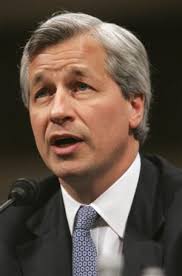
Jamie Dimon
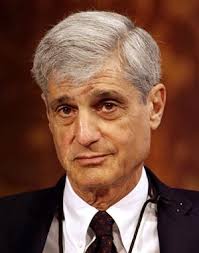
Robert Rubin

Phil Gramm
Next Post in Topic, "The Great Recession"


No comments:
Post a Comment