Friday, December 18, 2009

The Great Recession: Glass-Steagall Revisited


Senators John McCain (Republican; AZ) and Maria Cantwell (Democrat; WA) introduced a bipartisan bill on December 16, 2009 that would reinstate some of the banking safeguards that were eroded when the Glass-Steagall Act was repealed in 1999* (more).


Provisions of the Glass-Steagall Act that were enacted in 1933 restricted commercial banks (i.e., those that accepted deposits and made loans) from engaging in investment banking activities (i.e., issuing, underwriting, selling or distributing... stocks, bonds, debentures, notes or other securities).

With the repeal of Glass-Steagall in 1999* (GSA repeal), all of this country’s major commercial banks started aggressively participating in the risky world of Wall Street and investment banking. It was the creation and marketing of, and investing in, mortgage-backed securities and collateralized debt obligations (CDOs) by major commercial banks that caused this "Great Recession" when securities containing and derivatives (CDOs) based upon mortgages with an extremely high risk for default started plunging in value.

The proposed Cantwell-McCain Act would once again establish a firewall between commercial banks and investment banking activities, and also get commercial banks out of the insurance business.

This is a very positive step forward (along with proposed "Too Big to Fail; Too Big to Exist" legislation) in preventing the type of economic disaster we are now experiencing from ever happening again, and Senators McCain and Cantwell should be applauded for their efforts.


* FOOTNOTE:

To give a little historical perspective, and to underscore just how big of scoundrels some of the "Masters of the Universe" have been over the past 10 years, consider the following:

In April 1998, Travelers Group (Travelers Insurance) CEO Sanford I. Weill, and President/COO Jamie Dimon (current Chairman and CEO of JPMorgan Chase), announced an agreement to merge with Citicorp, creating CitiGroup, which at the time would be the largest and the most profitable company in the world. Because the merger violated the Bank Holding Company Act (BHCA) and portions of the Glass-Steagall Act (GSA) that prohibited banks from owning insurance companies, CitiGroup asked for, and received, a two-year forbearance from the federal government. The merger was completed on October 8, 1998.

Weill, Dimon, and others involved in the merger were confident that Congress would soon pass legislation overturning BHCA and GSA - they and the rest of the banking industry had lobbied hard for years and calculated that they had, by 1998, "bought-off" enough legislators to successfully obtain a repeal of those restrictive regulations. But just to hedge their bets, CitiGroup recruited ex-President Gerald Ford (Republican) to the Board of Directors, and the assistance of Robert Rubin (former Goldman Sachs executive; former U.S. Treasury Secretary). After resigning as Treasury Secretary (midway through second term in Clinton Administration), and while reportedly in secret negotiations to become a director on the CitiGroup board of directors, Robert Rubin helped broker the final deal to pass the bill which would repeal BHCA and GSA. Top CitiGroup officials were reportedly allowed to review and approve drafts of the legislation before it was formally introduced in the Senate.

The Gramm-Leach-Bliley Act (primary sponsor: William Philip "Phil" Gramm, former Republican U.S. Senator from Texas) passed in November 1999, repealing the BHCA and portions of the Glass-Steagall Act, thus allowing banks, brokerages, and insurance companies to merge, and making the CitiGroup/Travelers Group merger legal.

Sound a little skunky? It was! And it was this "Masters of the Universe" arrogance, and political skuldugery, that opened the door for, and encouraged, the outrageously-reckless banking activities that we now know were the root-cause of the "Great Recession" that we are all currently struggling to get through.


The Gang of Scoundrels that set the stage for the "Great Recession"


Sanford Weill
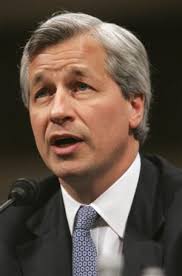


Jamie Dimon
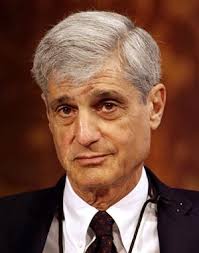


Robert Rubin


Phil Gramm


Next Post in Topic, "The Great Recession"

Thursday, December 17, 2009

The Great Recession: Goldman Sachs Backs Down (sort of)

Goldman Sachs, one of the two remaining major investment banks in the country and a major architect in causing the recent collapse of the American economy*, was planning on rewarding its top executives and traders with a total of $17 - $20 Billion in year-end bonuses for 2009 (link1; link2).

But apparently the public outcry over this conspicuous level of greed, combined with the threat that substantial windfall taxes might be levied against these bonuses, convinced Goldman to award company stock, instead of cash, to their top 30 executives this year (more). What a hardship - just how will they manage to scrape by without that cash! But of course, the stock will most likely end up being worth far more, in just a few years, than the canceled cash bonus.


* or as Lloyd Blankfein, Goldman Sachs Chairman and CEO, put it in November in a rare display of contrition: "We
participated in things that were clearly wrong and have reason to regret" (apology).


Next Post in Topic, "The Great Recession"

The Great Recession: Europe Taxes the Bonus Windfall

The British government, which like the United States propped-up failing banks with taxpayer funds, announced on December 9 that it would levy a one-time 50% tax on any banker bonus that exceeded approximately $ 41,000 (article). The move was designed to discourage big Christmas and year-end rewards for the bankers who caused this global economic catastrophe, and to try to recover some of the taxpayer bail-out money that was injected into the financial services industry.

The following day, the President of France announced that his country would impose an "equivalent" windfall tax on bankers’ bonuses (article).

Officials in both countries have urged their counterparts around the world, including the United States, to take similar actions against what is perceived as blatant banker greed at a time of global economic crisis.


Next Post in Topic, "The Great Recession"

The Great Recession: Goldman Sachs Gets Armed !


It’s almost humorous (if there can be any humor in this economic disaster).

It has been reported (article) that senior executives at the investment banking firm, Goldman Sachs, have been buying firearms, and applying for concealed weapons permits, in advance of receiving their 2009 year-end bonuses. Apparently, some of them have begun to get a little uneasy about the public reaction to their multi-million dollar bonuses, and the possibility of a "populist uprising" against them (an open hunting season on Wall Street?).

These "Masters of the Universe" still don’t understand why the American people hate them so much (I guess when you take home tens of millions of dollars each year for simply playing with other people’s money, it’s hard to relate to the person who was just getting by to begin with, and now has had his or her livelihood completely taken away). But even if they don’t understand the "why", at least they’re beginning to comprehend that middle-class America is mad as hell, and isn’t going to put up with their bullshit anymore.


Next Post in Topic, "The Great Recession"
-

Monday, December 14, 2009

The Great Recession: Bankers in Piggie Heaven


Banker Piggies Feeding at the Trough


That would be Ken Lewis (Bank of America) on the right, Vikram Pandit (CitiGroup) on the left,
and the biggest piggie of all, Jamie Dimon (JPMorgan Chase) in the center.

Gorging themselves on a piggie-feast of obscene, undeserved bonuses and perks,
with abusive credit card penalty fees and interest rate increases for dessert.

Fattening themselves before the slaughter?
The great American pork chop barbecue may be coming sooner than they think.

OINK !


Next Post in Topic, "The Great Recession"


Tuesday, December 8, 2009

The Great Recession: The Recession is Over ?


Economists have pronounced the national recession over as of August 2009. But don’t start celebrating just yet.

The recession may technically be over, but don’t expect any substantive improvements to occur anytime soon. The economic growth that was seen from May through November was modest, very modest (bordering at times on trivial) at best. The economic recovery is going to be long and slow. There is still great uncertainty about the economy, and in the world of economics and finance, uncertainty is the enemy. No one wants to be the first to jump back in, risk being premature, and get slapped back down.

So, the economic hardships for tens of millions of Americans will continue. More foreclosures as the next wave of risky mortgages come due to re-set. Continued unemployment. More people pushed out of their middle class existence and into financial distress.

Expect at least another 9 - 12 months before any semblance of normalcy begins to return. Even then, it may be years before the U.S. economy fully recovers from this "Great Recession". Sadly, millions of Americans may never recover, and quite possibly will remain in poverty even after this great economic catastrophe finally passes.

Never forget: This economic crisis did not just happen. It was engineered by a relatively small group of executives who control the financial services industry. All of this economic hardship and distress was caused by their greed, by their arrogance, and by their recklessness. Never forget... never let it happen again!


Next Post in Topic, "The Great Recession"-
-

The Great Recession: Still More on "Too Big to Fail; Too Big to Exist"


[original posting on subject, "
Too Big to Fail; Too Big to Exist Act of 2009"]
[also see: "More on Too Big To Fail; Too Big to Exist"]


Still don’t think Bernie Sanders’ (U.S. Senator, Vermont) proposed "Too Big to Fail; Too Big to Exist Act of 2009" has senior banking executives very, very worried?

Jamie Dimon (CEO and Chairman, JPMorgan Chase) certainly seems a bit worried. Shortly after the proposed bill was introduced, he had a commentary published in the Washington Post (November 13, 2009) where he offered his arguments for why there should not be legislation limiting the size or scope of financial-services companies.


Jamie Dimon, Chairman & CEO JPMorgan Chase
(don’t you just love his shit-eating, I got mine - screw the rest of you, banker smirk? )


Jamie’s self-serving diatribe confirms just how much the "Masters of the Universe" bankers really are divorced from the financial realities faced by most American consumers, and small and mid-sized American businesses.


In reality, the whole purpose for banks getting increasingly bigger is to support continuing growth of their profits. Any services that they happen to provide to consumers and business are merely coincidental to maintaining their growth. In fact, most of the "Masters of the Universe" would probably love to find a business model that would allow them to make oodles of money without having to deal with us pesky and costly customers.

Let’s take a closer look at Jamie’s propaganda:

  • (2nd paragraph): "scale can create value for shareholders"

    Rebuttal: Scale doesn’t guarantee shareholder value, and in fact can destroy shareholder value, as has recently been demonstrated for companies such as Citigroup, Bank of America, and others.


  • (2nd paragraph): "scale can create value for consumers, who are beneficiaries of better products, delivered more quickly and at less cost"

    Rebuttal:

    (a) Prior to the mid-1990s (when the "super-sizing" of banks began) fiscally- responsible people had no difficulty in obtaining the banking services and credit that they needed. Credit cards, automobile loans, unsecured personal loans, and home mortgages were all readily available to people who met common sense financial qualifications.

    (b) The result of the creation of super-banks over the past 15 years is the present economic chaos... hardly a benefit to consumers. Somewhere between 30 and 50 million American citizens have been significantly (and in many cases severely) impacted by the greed and recklessness of the super-banks. Probably about half that number got into trouble because the super-banks provided then with credit, or credit terms, which were not appropriate for their financial circumstances. But the other half, 15 - 25 million American consumers, did absolutely nothing wrong - they just ended up being collateral damage in the economic meltdown that the super banks caused. So, where the hell is this "value" to consumers that you’re prattling about Jamie?


  • (2nd paragraph): "scale can create value for the businesses that are our customers"

    Rebuttal: So where’s the "value" in millions of small and mid-sized American businesses going under because the super-bank-caused recession has destroyed their revenue streams, and locked them out of the credit they need to cover ongoing operating costs? Come on Jamie, the greed and recklessness of the super-banks even brought some of the largest multinational corporations of this country (for example GM) to the brink of failure.


  • (2nd paragraph): "scale can create value for the economy as a whole"

    Rebuttal: Yeah, right.... so how’s that working for you America? The negligent and reckless actions of the bloated super-banks set the American economy teetering on the brink of complete collapse, and you want to argue that that is "value" for the economy Jamie? Just what have you been smoking recently, eh?


  • (7th paragraph): "... some of America's largest companies... operate around the world... need financial-services partners that can efficiently execute diverse and large-scale transactions; that offer the full range of products and services from loan underwriting and risk management to providing local lines of credit; that can process terabytes of financial data; that can provide financing in the billions"

    Rebuttal: So Jamie, you want to argue that multi-national corporations, and a global economy, have only existed since the mid- to late 1990s? Come on now... American companies have been doing business around the world, and we’ve had a "global economy", since at least the mid-1960s. The multi-national business world operated just fine, long before the creation of today’s super-banks.


  • (5th paragraph): "financial institutions... can pose serious risks for our markets because of their interconnectivity. A cap on the size of an institution will not prevent that risk"

    Rebuttal: ????? Jamie, the interconnectivity is a direct result of size. The super-banks have their tentacles extended into every facet of the American financial system. They control the lion’s-share of capital in this country, shuttle it around between themselves, and then dole it out in small amounts to the rest of the system. The smaller community and regional banks are at the mercy of the super-banks for both capital, and for a variety of processing and other banking services. If we go back to a financial system based upon local and regional institutions, this problem of interconnectivity and dangerous banking monopolies will cease to exist.


  • (2nd & 3rd paragraphs): "...ensuring that even the biggest bank can be allowed to fail in a way that does not put taxpayers or the broader economy at risk... creating the structures to allow for the orderly failure of a large financial institution... giving regulators the authority to facilitate failures when they occur"

    Rebuttal: Sounds good, but, would there really ever be such a thing as an "orderly failure" of a large financial institution? I mean, as soon as the first inkling of trouble got out, the financial world would react and the damage to the overall economy would be already done. In reality, the only way to keep the failure of a large financial institution from damaging the overall economy, is to prevent them from getting too big, and from acquiring too much economic power, in the first place.


  • (1st paragraph): "...if some unforseen circumstance should put this firm [JPMorgan Chase] at risk of collapse.... we should be allowed to fail"

    Rebuttal: Again, sounds good. but what if it’s not an unforseen circumstance that’s involved? What if it’s the reckless, negligent actions of Jamie Dimon that put the company at risk? Should the company still be allowed to fail and shareholders and creditors punished? Shouldn’t, in such a case, Jamie Dimon be held responsible for the collapse, and personally liable for all the consequences and damages that result?

    We’d like to know Jamie, because in the current financial crisis, there were no unforseen circumstances involved. This economic meltdown was caused by a handful of financial-service company executives who negligently and recklessly:

    - engaged in, or facilitated, the origination of extremely poor quality and risky mortgages;

    - underwrote and distributed asset-backed securities from this pool of risky mortgages;

    - created, disseminated, and invested in outrageously risky derivative instruments (collateralized debt obligations) that had these near-worthless mortgages at their foundation;

    - participated in the misrepresentation of poor quality securities and CDOs as "investment-grade" instruments.

    Why should creditors and shareholders take the fall for the negligence (or even criminal fraud) of bank executives?

    Instead of being held personally liable for the damages they caused, many of the super-bank "Masters of the Universe" who created this current economic mess not only got to retain their jobs, they even got bonuses. Most of the rest were allowed to gracefully "retire" with generous buyouts and pensions, or were handsomely rewarded with a "golden parachute" when their contracts were terminated. So Jamie, do you see now why the American public is so pissed-off at you and your banking colleagues?


I’m sorry Jamie - I just can’t buy any of your arguments. Remember, you were a big part of the problem that created this "Great Recession" - you and your JPMorgan Chase were up to your eyeballs in the subprime and other high-risk mortgage bullshit that caused the economic meltdown.

The only reason JPMorgan Chase didn’t experience the same level of pain as some of its super-bank peers is that you got cold feet in late 2006, dumped $12 Billion of toxic mortgages that had been originated or acquired by your company (as in, you transferred the risk from your company to other people), and got out of the risky derivatives (collateralized debt obligations) game (more). Yes, that made you a hero with your shareholders, but you still have to claim responsibility for your contribution to the damages that have been inflicted upon the U.S. economy.

So it comes down to this Jamie: As far as I’m concerned, your arguments against regulating the size of financial companies are just the same tired propaganda we’ve come to expect from the banking industry. You worked most of your career to create the country’s largest financial-services company: Your own personal banking empire. You’ve played the "mine’s bigger than your’s" game very well for many years. And now it’s obvious that you’re very afraid that all that you’ve worked to create is going to be taken away and/or dismantled.

Too bad... but it’s no one’s fault but your own Jamie. Your undoing was the blatant greed, arrogance, and recklessness that you and your fellow super-bankers displayed over the course of the past 15 or so years. The citizens of this country have the right to insist that individuals like you never have the opportunity to inflict this kind of devastating economic damage on the American people again.


Next Post in Topic, "The Great Recession"

Tuesday, December 1, 2009

The Great Recession: Thanksgiving 2009


Well, Thanksgiving 2009 has come and gone. For tens of millions of Americans this year, there probably wasn’t a whole lot to be thankful for. And the Christmas holiday season is probably looking pretty grim for them too.

Somewhere between 15 and 20 million Americans are currently out of work, with unemployment benefits quickly running out and no likelihood of improvement in the jobs market for at least another 9 - 12 months. These folks will most likely become economic casualties as their homes and possessions are taken from them by the same banks that caused this economic mess.

Still another 15 - 20 million Americans (maybe even more) are dealing with under-employment or reduction in income, and are struggling to get by month-to-month. Recent reports indicate that up to 60% of American households are currently experiencing moderate to severe financial distress.

But don’t fret - I’m sure that the small group of "Masters of the Universe" who created this economic debacle will be having a pretty comfortable and enjoyable holiday season.

Here’s a short list of the grinches who brought you this economic crisis. It’s by no means a complete list - these are just some of the individuals who managed to do the most damage to the U.S. economy and the American people:

Kenneth D. Lewis - former Chairman / retiring CEO (Dec 2009), Bank of America

James L. "Jamie" Dimon - current Chairman / CEO, JP Morgan Chase

Vikram Pandit - current CEO, CitiGroup

Charles Prince III
- former CEO, CitiGroup

Richard Kovacevich - former Chairman / CEO, Wells Fargo

G. Kennedy Thompson - former Chairman / CEO, Wachovia

Kerry K. Killinger - former Chairman / CEO, Washington Mutual

Jeffrey Peek - former Chairman / CEO, CIT Group


Jerry A. Grundhofer – former Chairman / CEO, US Bancorp

Richard Syron - former Chairman / CEO, Freddie Mac

Franklin Raines - former Chairman / CEO, Fannie Mae

Daniel Mudd - former CEO, Fannie Mae

James E. Cayne - former Chairman / CEO, Bear Stearns

Henry M. "Hank" Paulson - former Chairman / CEO, Goldman Sachs

Lloyd C. Blankfein - current Chairman / CEO, Goldman Sachs


Richard Fuld - former Chairman / CEO, Lehman Bros.

E. Stanley O'Neal - former Chairman / CEO, Merrill Lynch

John J. Mack - former CEO; current (Sept 2009) Chairman, Morgan Stanley

Angelo Mozilo - former Chairman / CEO, Countrywide Financial

Brad A. Morrice – former CEO, New Century Financial

Robert K. Cole – former CEO, New Century Financial

William D. Dallas - former Chairman / CEO, Ownit Mortgage Solutions

David A. Daberko - former Chairman / CEO, National City Mortgage

Wayne Lee - former CEO, Ameriquest Mortgage


[There will be a lot more specific information, and detailed discussion, about some of these "Masters of the Universe" posted here at a later date]


If you happen to run into one of these overly-privileged bankers, be sure to congratulate them on receiving their fat bonuses, stock / stock-option awards, golden parachute payments, and/or retirement buy-outs. And of course, don’t forget to thank them for all that they’ve done to enhance the financial security of the American public.


Next Post in Topic, "The Great Recession"
-